
Energy bills aren’t getting any cheaper, and UK homeowners are understandably tired of paying to heat empty rooms or light spaces nobody’s using. Smart home automation offers a genuine solution to this problem.
Rather than treating heating, lighting, and blinds as separate systems, smart home energy efficiency comes from connecting them. When your thermostat, lights, and blinds talk to each other, your home stops wasting energy on rooms you’re not in and starts working around your routine. Let’s bring those three systems together to show what’s possible when they’re installed and configured properly.
What Is Smart Home Automation and How Does It Improve Energy Efficiency?
Smart home automation refers to connected systems that let you control heating, lighting, blinds, and appliances from a single app or voice command, rather than juggling separate switches and dials around the house. Instead of managing each system in isolation, everything is managed through a unified interface, whether that’s a smartphone app, a smart speaker, or a wall-mounted control panel.
The energy-saving power comes from automation, not just remote control. Rather than simply giving you the ability to turn things off from the sofa, smart home systems actively adjust themselves based on real-world conditions. Your home responds to occupancy, time of day, and outdoor temperature, instead of relying on you to remember to turn things off. For example, if no one is in a room, the lights can switch off automatically. If the sun is warming a south-facing room, the thermostat can account for that. The result is a home that works around your actual routine, cutting waste without requiring constant input from you.
How Can Smart Heating and Lighting Cut Energy Waste?
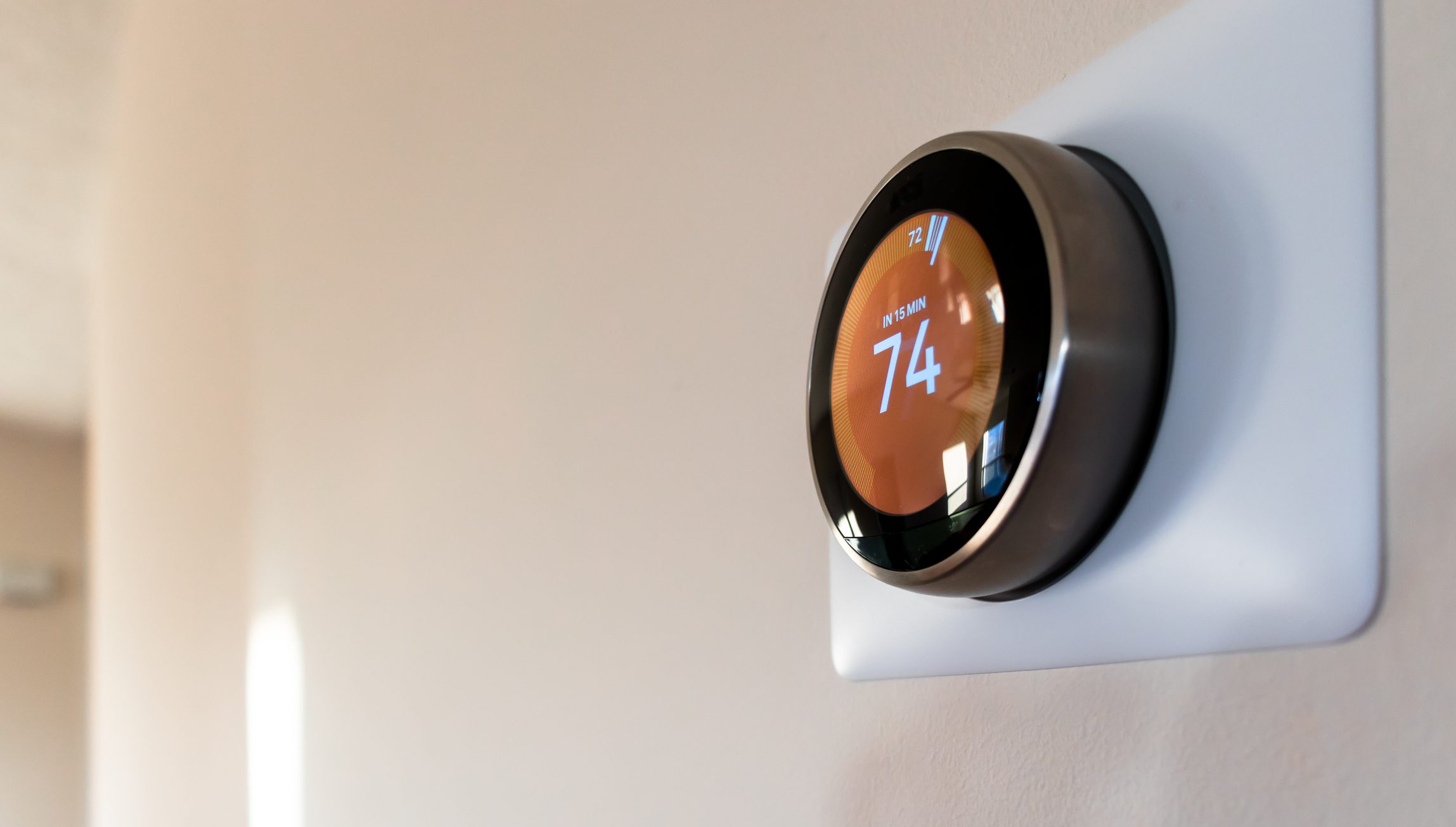
Smart heating and lighting are often installed separately, but the real savings come when they’re integrated. A smart thermostat like Hive or Nest already reduces waste by learning your schedule and letting you adjust heating remotely. Research cited by The Guardian found that UK households using these systems saw gas savings of 8–16.5% and electricity savings of around 10–17.5%.
Smart lighting adds another layer of savings. LED smart bulbs already use far less energy than halogen or incandescent alternatives, but automation is what stops lights from staying on in empty rooms. Motion sensors switch the lights off automatically when a room clears, while scheduling ensures the lights activate only when they’re actually needed.
When heating and lighting are configured through a single smart home energy management system, rather than two disconnected apps, you get a home that responds to your presence rather than your memory. Choose an integrated setup over standalone gadgets if you want your energy savings to compound across every room, rather than being limited to whichever device you remembered to automate.
What Role Do Automated Blinds Play in Smart Home Management?
Blinds rarely get mentioned in energy-saving conversations, yet windows are a major source of heat loss. Up to 50% of a home’s heating energy can escape through windows. Automated blinds address this directly by opening and closing on a schedule based on time of day, season, or indoor temperature.
In winter, blinds can open during daylight hours to let in natural warmth, then close in the evening to trap heat. In summer, the same automation blocks midday sun to reduce the need for cooling. This reduces dependence on your heating and cooling systems without any manual adjustments.
The real value shows up when blinds sync with your thermostat and lighting through the same home automation energy-saving system. A blind that closes automatically as the temperature drops, alongside heating that lowers when a window opens, creates a home that manages its own climate far more precisely than any single device could alone.
How Much Can Smart Home Automation Save on Energy Bills?
The combined effect of smart heating, lighting, and blinds is where the real savings appear. Bringing these three systems together into a single smart home automation setup can reduce overall household energy use by 10–30%, with adaptive climate control features driving savings as high as 50%, according to industry data. Vampire appliances left on standby can also account for up to 23% of household energy use, which is why many integrated systems include smart plugs alongside heating, lighting, and blinds to close that gap entirely.
Choose a fully integrated system over piecemeal upgrades if your priority is maximising total savings, since each component reinforces the others. A thermostat that knows a blind has just blocked the sun, or lighting that dims automatically once natural light increases, delivers more efficiency than any single device working in isolation.
How Professional Installation Improves Energy-Efficient Home Automation
DIY smart home kits can offer savings, but professional installation ensures your thermostats, lighting, and blinds are wired correctly and configured to work as a single system rather than several competing apps. A professionally installed setup also ensures compatibility and safety across your home’s electrical system.
Costs vary depending on the scope. Smaller setups covering smart lighting and a thermostat typically start around £2,000, while more comprehensive installations, including blinds, security, and entertainment control, can range from £8,000 to £18,000. Choose the smaller setup if you’re testing the waters with one or two rooms, and choose a fully integrated installation if you want the compounding savings of heating, lighting, and blinds working together from day one.
What to Consider Before Investing in Home Automation
Before committing to a system, take a step back to think through what will deliver the best return for your specific home and lifestyle. Consider the following:
- Identify Your Biggest Energy Drains First – Tackling the biggest source of waste first ensures your investment delivers visible savings quickly, rather than spreading a limited budget too thinly across every room at once.
- Think About Long-Term Integration – A thermostat or lighting system installed in isolation today can usually be expanded later, but planning for smart home energy management from the outset avoids the cost and hassle of replacing incompatible devices down the line.
Start Building a More Energy-Efficient Home Today
Smart heating, lighting, and blinds each deliver savings on their own, but the biggest gains come from bringing them together into one connected system. A home that adjusts its own temperature, lighting, and window coverings based on your routine cuts bills and removes the daily effort of managing energy use altogether.
If you’re ready to see how an integrated setup could save you on your energy bills, contact Smart Homes Electrical today. A tailored plan that accounts for your home’s layout, existing systems, and energy habits will show you exactly where automation delivers the fastest return.