
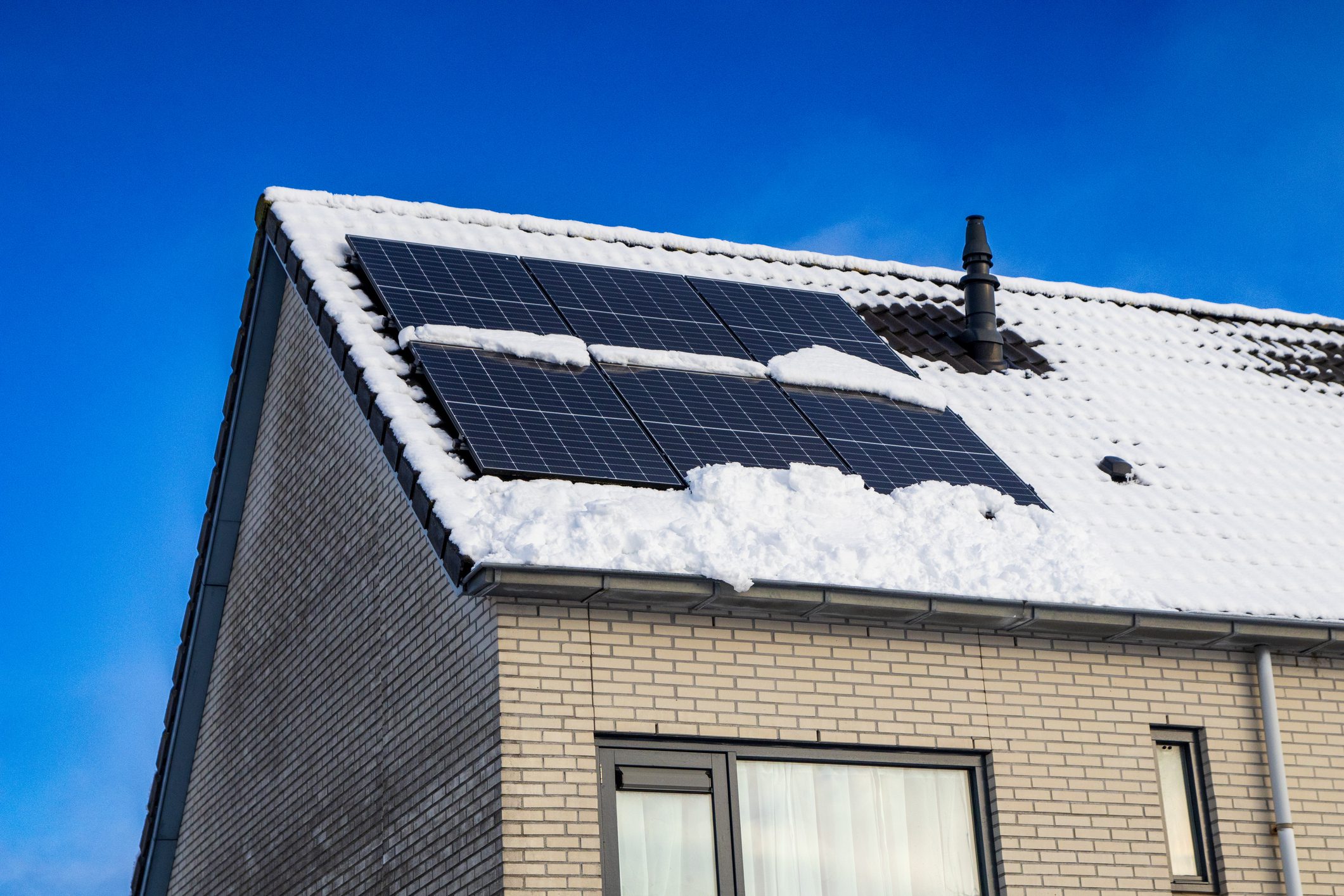
Colder months in the UK bring shorter days and a lower sun angle, so it’s natural to wonder whether solar panels in winter are worth the investment. However, even in winter, they keep working, and in some ways, cold weather even helps. Solar cells are semiconductors that gain a small efficiency boost as temperatures drop. What actually reduces output isn’t the chill, but the reduced daylight hours and weaker sun angle that come with the season.
That said, winter generation is genuinely lower than summer, often falling to somewhere between 10% and 30% of peak summer output, depending on your location and system. Rather than treating this as a limitation to accept, it’s an opportunity to be more strategic. With the right habits and a bit of planning, you can stretch every bit of winter solar energy your panels produce and keep your energy bills lower even during the darkest months.
Below, we’ll walk you through practical, actionable ways of getting the most from solar panels this winter, covering everything from appliance scheduling to battery storage and system monitoring.
How Do Solar Panels Work in the Winter?
Solar panels convert light into electricity through the photovoltaic effect, where photons striking silicon cells knock electrons loose to create current. This process depends on light, not heat, which is why solar panels work in winter even on cold, overcast days. The main factors affecting winter output are:
- Shorter Daylight Hours – Winter days offer roughly half the sunlight hours of summer, directly cutting the window for generation.
- Lower Sun Angle – The sun sits lower in the sky, meaning less direct light hits your panels at midday compared to summer’s overhead sun.
- Increased Cloud Cover – More overcast days mean panels rely more heavily on diffuse light, which still generates power, just at a reduced rate.
1. Schedule Appliances Around Peak Daylight Hours
Since solar-generated electricity that isn’t used immediately gets exported back to the grid, timing your energy consumption to match generation is one of the simplest ways to improve solar panel efficiency in winter.
Run washing machines, dishwashers, and other high-draw appliances during the middle of the day, when daylight levels are at their strongest. If you’re home during the day, consider batch cooking with an electric oven or slow cooker to take advantage of the generation window rather than cooking in the evening once the sun has set.
This single habit shift can noticeably increase how much of your own solar power you actually use, rather than exporting it at a lower rate than you’d pay to import electricity later.
2. Keep Your Solar Panels Clean and Free of Shade
Dust, grime, and fallen leaves all reduce the amount of light reaching your cells, and this matters more in winter when every bit of available sunlight counts. Regular cleaning, such as using low-pressure water, a soft brush, and a squeegee, helps keep panels performing at their best. Professional cleaning services are also an option if your panels aren’t easily accessible.
Shading is another factor worth addressing before winter comes. The lower winter sun angle casts longer shadows, meaning a chimney or tree branch that doesn’t shade your panels in summer might block sunlight in December. Late winter is a good time to prune back vegetation to reduce obstruction. If your system uses power optimisers, one shaded panel won’t drag down the performance of the rest of the array.
3. Add Battery Storage to Capture Every Available Watt
Battery storage is arguably the single biggest lever for improving winter solar energy economics. Since it’s nearly impossible to use all your solar power the moment it’s generated, a battery lets you store surplus daytime generation and use it later, when the sun has gone down and household demand often peaks.
Pairing a battery with a smart, time-of-use tariff extends the benefit further. You can charge your battery from cheaper off-peak grid electricity overnight, then draw on that stored power during expensive evening peak hours.
4. Build Energy Consumption Habits That Match Your Generation
Beyond scheduling individual appliances, it helps to build broader habits around your household’s energy consumption. Combining solar panels with other electrified technology, such as an EV or a heat pump, gives you more ways to soak up daytime generation productively. Charging an EV during daylight hours or timing heat pump operation around peak solar output both help capture power you’d otherwise export at a lower return.
It’s also worth joining a well-paying export tariff for the power you inevitably do send back to the grid. Even with careful scheduling, some exported electricity is unavoidable, so make sure you’re compensated fairly for it.
5. Monitor Your System Regularly to Catch Performance Issues
System monitoring is often overlooked, but it’s essential for getting the most from solar panels year-round in the UK. Most modern solar setups include an app or dashboard that tracks daily and monthly generation, letting you spot unexpected drops in output.
A sudden dip in performance on an otherwise clear day could indicate a dirty panel, a developing shade issue, or an inverter problem worth investigating. Regularly checking this data also helps you understand your own generation patterns, so you can fine-tune when you run appliances or charge a battery for maximum benefit.
Keep Your Solar Panels Working Hard All Season
Winter doesn’t stop your solar panels from generating electricity, but it does change how you should use what they produce. By scheduling appliances around peak daylight, keeping your panels clean and shade-free, adding battery storage, building better consumption habits, and monitoring your system’s performance, you can capture significantly more value from your panels during the shorter days of the year.
None of these steps requires a major investment, just a shift in timing and attention. Start with the habits that cost nothing, such as appliance scheduling and monitoring, then consider battery storage if you haven’t already, as it tends to offer the biggest overall improvement to winter solar performance. For a quote on solar panel installation or battery storage options in the UK, contact Smart Homes Electrical today.