
A solar panel smart meter setup is one of the most effective ways to understand your home’s energy habits and get paid fairly for the electricity you don’t use. But solar monitoring and smart metering aren’t quite the same thing, and understanding the distinction helps you get more value from both.
Let’s explore how solar panels and smart meters work together in the UK, what separates monitoring from metering, and how to use the data generated by both systems to lower your bills.
What’s the Difference Between Solar Monitoring and a Smart Meter?
Solar energy monitoring refers to the app or portal that comes with your solar panel system. It shows you, often in real time, exactly how much electricity your panels are generating, how much your home is consuming, and how much is being sent to a battery or exported. This data usually updates every few seconds or minutes and is designed to help you understand your system’s day-to-day performance.
A smart meter, on the other hand, is a device installed by your energy supplier that records how much electricity flows into your home from the grid and how much flows out from your solar panels. It communicates this data directly to your supplier over a secure national network.
In short, solar energy monitoring tells you how your panels are performing, while a smart meter with solar panels tells your supplier how much you owe or how much you’re owed. You benefit from having both, since one provides granular performance insights and the other handles billing and export payments.
How Do These Two Instruments Work Together?
A solar panel system generates electricity during daylight hours. Your home draws on that supply first, with any shortfall topped up from the grid and any surplus exported.
For this to work smoothly on your bill, you need a bidirectional smart meter, one that measures imports and exports as two separate figures. This is the technical foundation for a functioning smart-meter solar energy setup. Without separate readings, your supplier has no accurate way to credit you for the electricity you return.
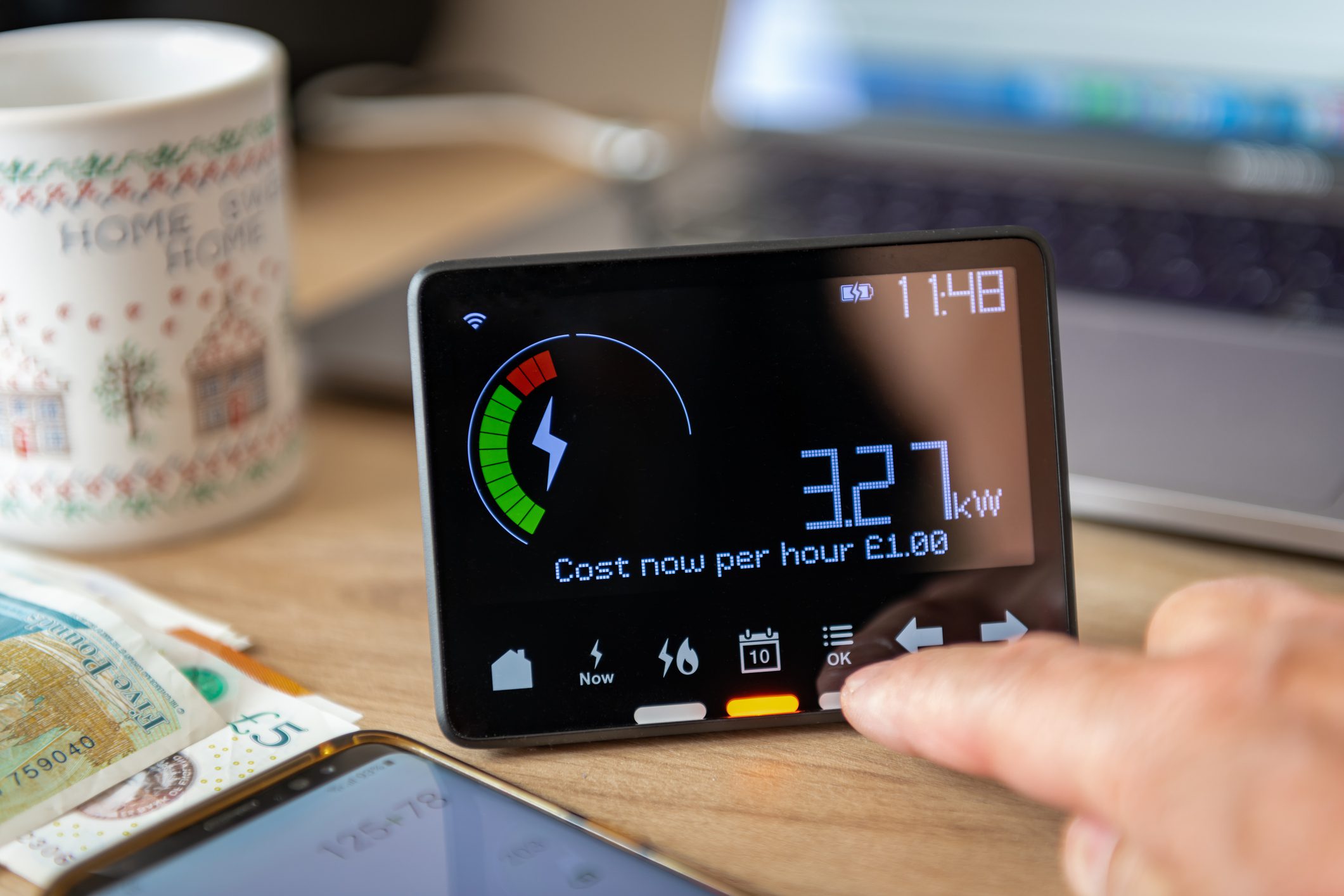
Inside the home, a home area network connects the meter to an in-home display or a supplier’s app, giving you a running picture of your solar panel energy usage without needing to check the meter itself.
Which Smart Meter Generation Works Best With Solar Panels?
Not all smart meters handle solar exports equally well. There are two generations in the UK:
- SMETS1 Meters – Installed mainly between 2011 and 2017, these meters sometimes mistook solar-generated electricity for grid imports, occasionally leading to households being charged for their own supply. Many also lost their “smart” functionality when the customer switched suppliers, reverting to manual readings.
- SMETS2 Meters – The current standard since 2017, the SMETS2 meters resolve both issues. They operate on the Data Communications Company’s dedicated national network, accurately measure exports, and remain smart even after a switch.
How Does a Smart Meter Track Solar Energy Usage?
A smart meter plays a central role in how a solar household monitors and manages its energy. For solar users in particular, it performs three core functions that work together to give you a clearer picture of your energy flow:
- Measures Import – A smart meter tracks how much electricity your home draws from the grid when panels aren’t generating enough.
- Measures Export – The meter records surplus electricity sent back to the grid, which forms the basis of Smart Export Guarantee (SEG) payments.
- Enables Optimisation – It also provides timestamped data that helps you and your supplier align usage with cheaper tariff periods.
How Homeowners Can Use Smart Meter Solar Energy Data to Save Money
Choose a time-of-use tariff if lowering your grid costs matters more than simplicity. These tariffs charge less overnight or midday and more during peak evening hours, and a smart meter’s 30-minute readings make it possible to bill you accurately for exactly when you used electricity.
Because solar panels generate most of their output during daylight, when time-of-use rates are often lower, pairing solar with one of these tariffs can reduce how much you pay for any electricity you still need to import. Homeowners with battery storage benefit even further, since surplus daytime solar can be stored and used during expensive peak periods rather than exported for a lower export rate.
Checking your in-home display or supplier app regularly also helps you spot which appliances draw the most power, so you can shift usage to make the most of free solar generation.
What if My Smart Meter Doesn’t Support Solar Panel Monitoring?
If your meter isn’t recording exports correctly, don’t assume you’re stuck. Contact your supplier and ask them to check your meter’s generation and, if it’s an older SMETS1 model, request an upgrade to SMETS2. This is a free process, and it’s the only way to ensure you’re being paid correctly for exported electricity under the SEG.
It’s also worth checking your meter type directly: SMETS1 serial numbers typically begin with “19P,” while SMETS2 numbers begin with “19M.” This information is usually printed on your energy bill or on the meter itself.
Don’t Let Your Exported Energy Go Unpaid
A smart meter with solar panels isn’t just a regulatory requirement for claiming export payments. It’s the clearest window you have into how your home actually uses energy. Pair that meter data with your solar monitoring app, and you get a complete picture: real-time generation on one side, accurate billing and export tracking on the other.
If you’re ready to make the most of your solar setup, contact Smart Homes Electrical today to find out how we can help you get the right smart meter in place and start earning what you’re owed for every unit you export in the UK.